Bedonna's Stallion Station and Performance Horses
|
HOME
FOR SALE
STALLIONS
PONY
Stallions and Ponies
Broodmares at the
Ranch
Custom Made Foals Program
2017 Foals
2018 Foals 2019 Foals
2020 Foals
Information & Transport
Terms of Sales/Payment Plan
info
email -
BedonnasStallionStation@hotmail.com
Example: of
Foal Purchase Agreement
Ranch Raised Foals
(see 'Donkey-Time' below)
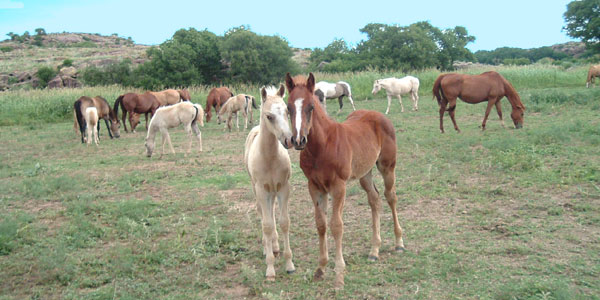
I try very hard to
let my foals experience as much as possible while being
raised here at the ranch.
I don't want to 'Pamper' them,
but 'Prepare them' for life.
I
hear most of my buyers report back with comments like...
"This
is the smartest horse I've ever owned."
"You just have to show him something once... and he
picks it right up"
"He seems to adapt to whatever comes his way".
These are the kinds of
comments that make me believe that raising the foals
the "Ranch Way" sure has its benefits.
We raise many foals here at the ranch every year.
I have a different way of raising my foals than some
people...
and I find myself explaining my reasons for my
methods, and so I decided to build a page on my site to
explain it all....
I guess I'll start at the beginning...
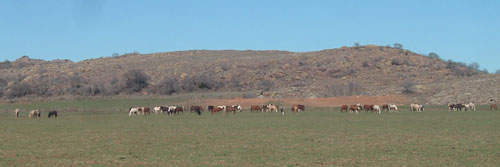
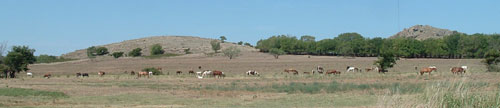
The Broodmares live in herds out in large
pastures most of the year.
They are usually only brought up to the barns for
a few weeks to be re-bred. Mares are bred via
Artificial Insemination,
and then they
are usually turned back out into pastures with their foals after
they are checked in-foal.
(unless there is a severe Drought... then they are at
the Breeding Facility most of the year)
While at the Breeding Facility... the foals experience
barns, lights, sounds, and other things they would not
experience in the pasture.
Most of my foals are born in March, April, May, and
June.
This is usually a time that is past the severe winter
weather, and before the blistering summer heat arrives.
My broodmares foal out in the small
pastures here near the breeding facility.
I feel that outside in the pastures is the cleanest place
for them to foal. I seldom catch a glimpse of a
foal being born, but once in a blue moon I get lucky.
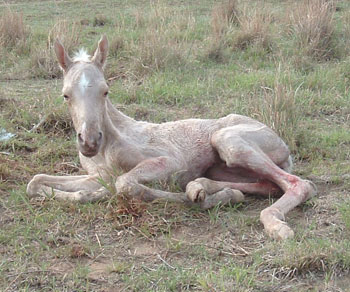
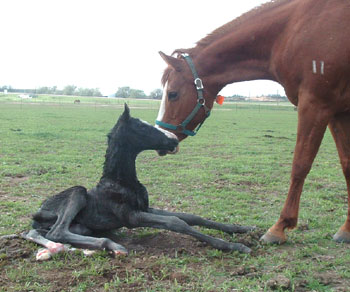
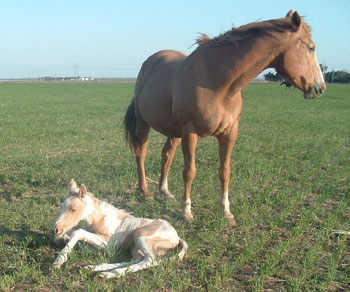
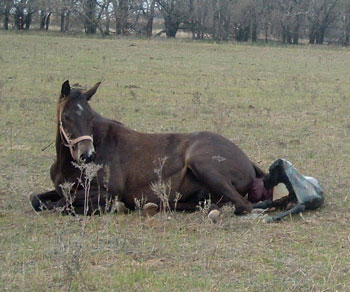
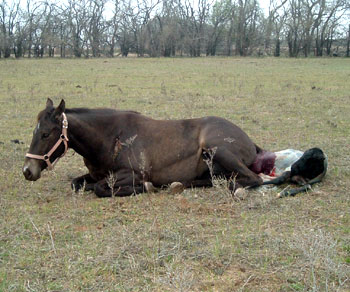
This mare was at a pasture near the breeding barns when
she foaled, and she also foaled during the day...
giving me a chance to Almost see the foal born!
The foal was up in Minutes!
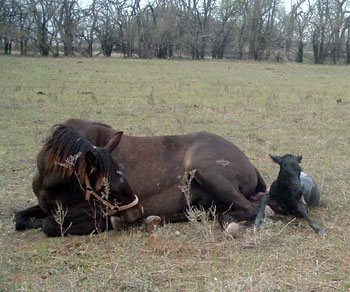 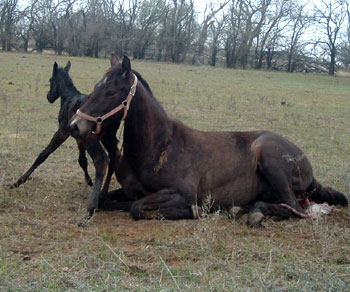
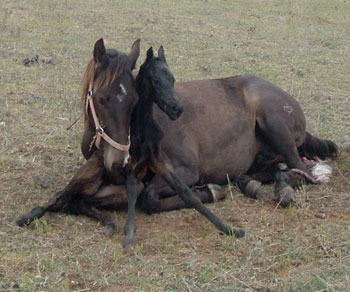
Broodmares and Foals live outside most of the time. Not locked up
in heated or air-conditioned barns. I don't
believe in keeping foals locked up in stalls.
I
feel they are better off outside with fresh air and
clean environment and plenty of room to exercise.
GOD designed
them to live outside, get a bath when it rains, grow
winter hair when it's cold,
and be smart enough to turn
his rear to a strong wind.
One of my main goals is that my Ranch Raised
Foals learn how to THINK.
They learn to follow their dams while
grazing and traveling back to water starting on the
first day of their life.
They learn to make good choices, and stay safe out in
the pastures.
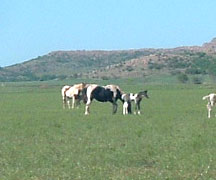
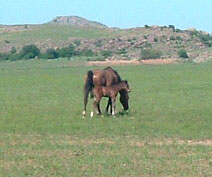
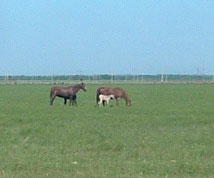
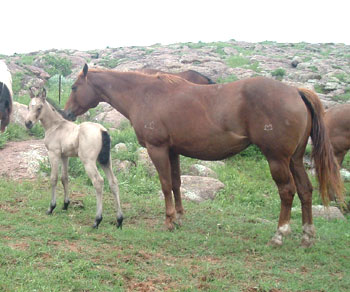
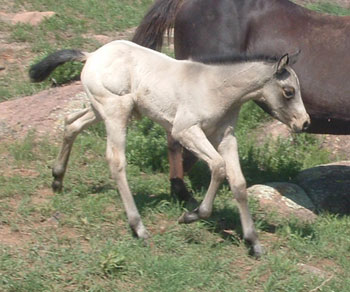
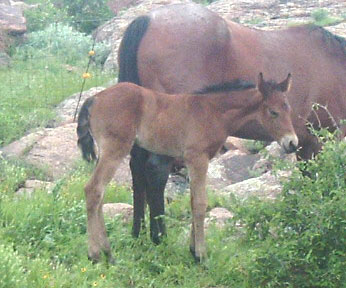
These foals learn to walk through Water...
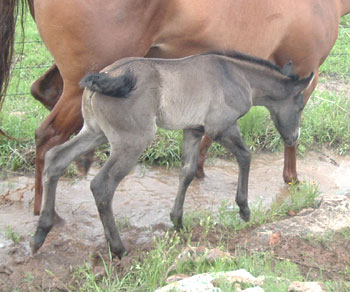
Learn to keep their footing in the mud...
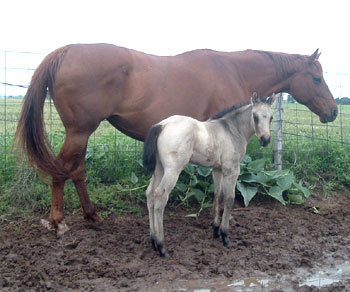
and, Learn to navigate Rocks, and Uneven ground.
The Broodmares and Foals drink from Ponds while
at the bigger pastures.
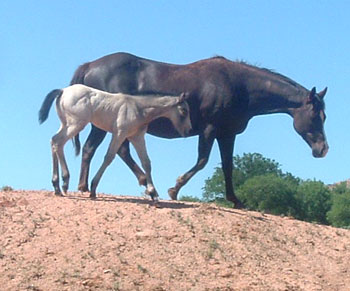
So, the Foals have to learn how to climb the
pond dams, and deal with slippery mud.
These are skills that will help prepare them for being a
'Sure-Footed' and safe riding horse.
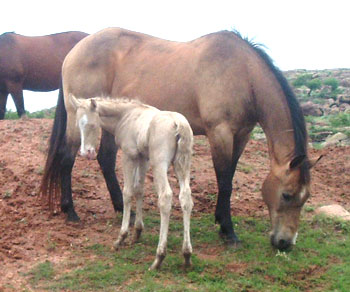
Ponds are also a great way for my Ranch Raised
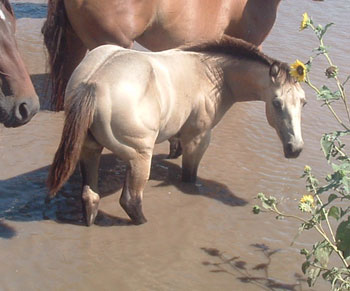
Foals to overcome a fear of water.
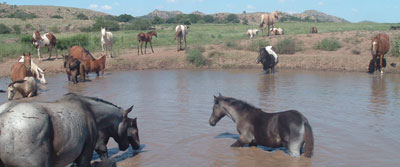
Many Play in the water often.
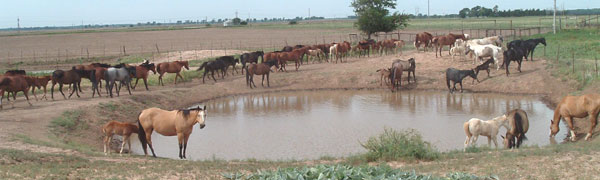
**** During a Drought... the Ponds are Dry, or too
Low, and the mares and foals are kept at the breeding
facility. ****
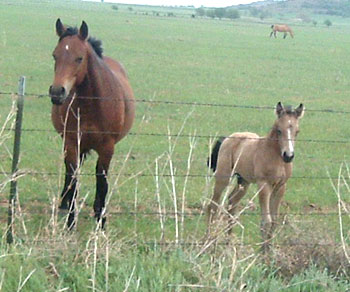
They learn about Barbed Wire too. I also try to
expose all my foals to 'hot wire' before they are
weaned.
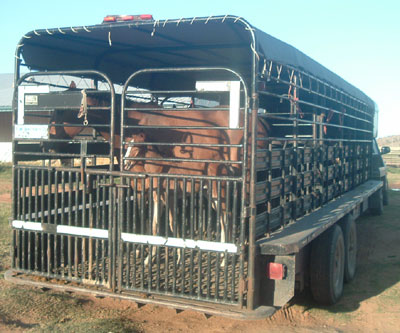
They sometimes experience their first Trailer Ride when
just a few days old if they foaled at the other ranch.
If they are born at the nearby pastures, then they are
hauled in a large Stock trailer a short ways from the
big pastures where to the
Breeding Facility.
The first ride is short and not stressful, and a perfect
introduction to being hauled.
Then, after the mare is re-bred and checked in-foal,
they are sometimes hauled back to the big pastures.
If they are born at the breeding facility... they will
have to wait for the first trailer ride.
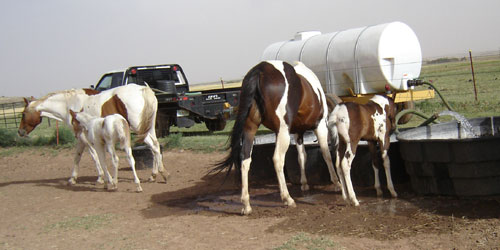
While at the Breeding Facility... Foals may experience "The
Water Truck".
I often have to haul water to horses at the Breeding Facility,
and this is a good opportunity for foals to be exposed
close-up to
more Vehicles, Trailers, and unusual noises. They
often play in the water from the Water hoses too.
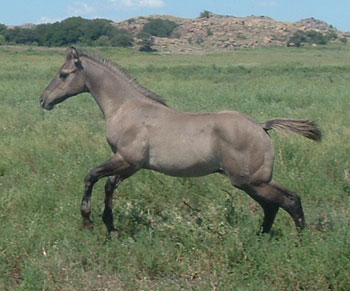
I feel it's important for foals to have lots of
room to run and play.
This not only helps with coordination and
confidence... it also helps with being sure-footed,
and
helps build stamina, and strength, along with speed and
athleticism.
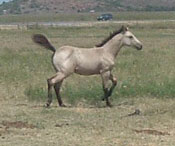
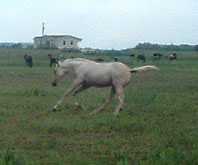
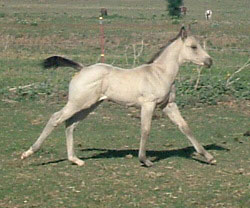
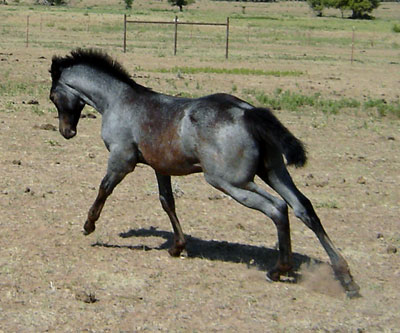
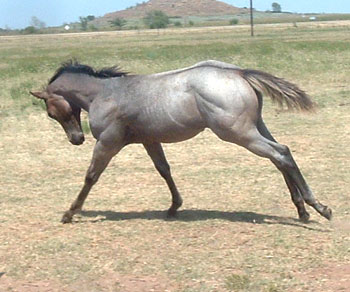
My Foals spend most of their days playing with other
foals, and often form strong friendships.
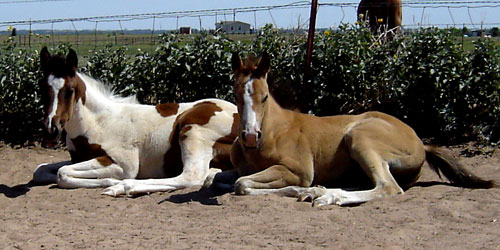
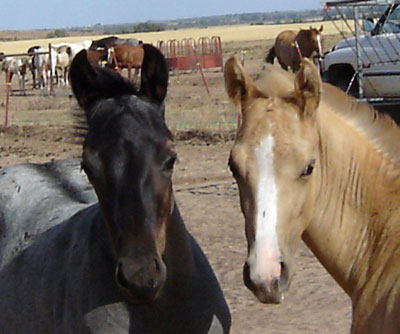
The foals also experience other things while at the
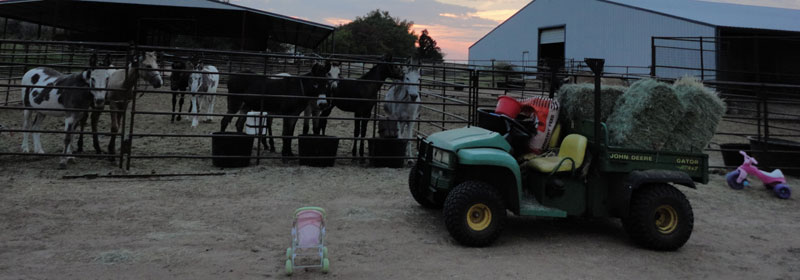
Breeding Facility like "The Gator".
I feed twice a day, and I load the "Gator" or
another vehicle with hay and
feed and drive up and down the lanes to feed.
This is a great way for foals to be comfortable with all
kinds and sizes of vehicles they may experience in life.
My foals are so used to this kind of thing, that later
in life... 4-Wheelers, and other things don't usually
spook them.
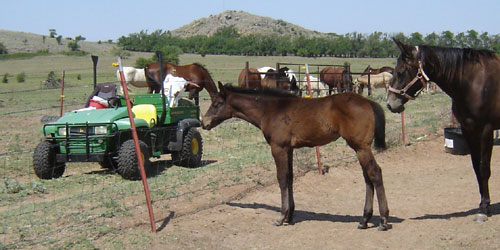
Gators... Tricycles... etc.
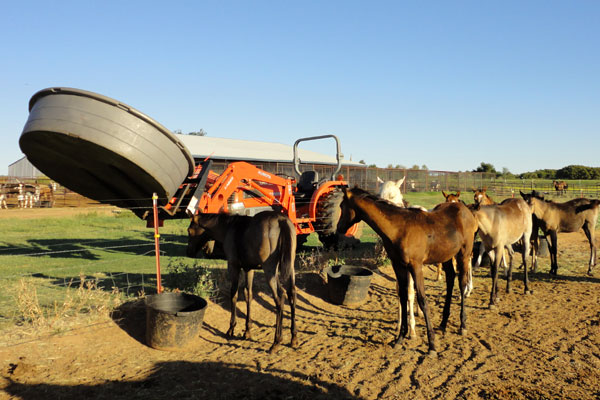
I also use a Tractor around the ranch, and the foals
tend accept all these things, and not be spooky of them.
Here, I am moving a large 700 gallon water tank with the
tractor.
The foals came right up to the fence to check it out!
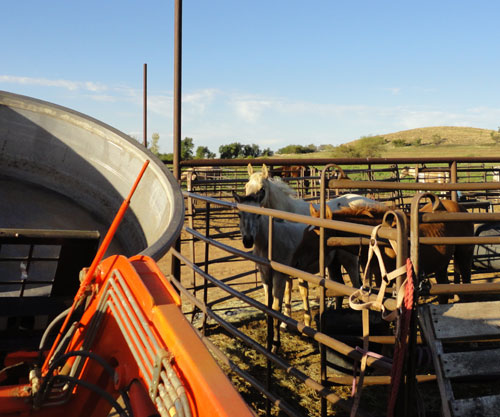
Even inches from the gate... the foals in this corral
came to check out the new sights.
I start de-worming foals when they are
around 4 weeks old, and de-worm regularly thereafter.
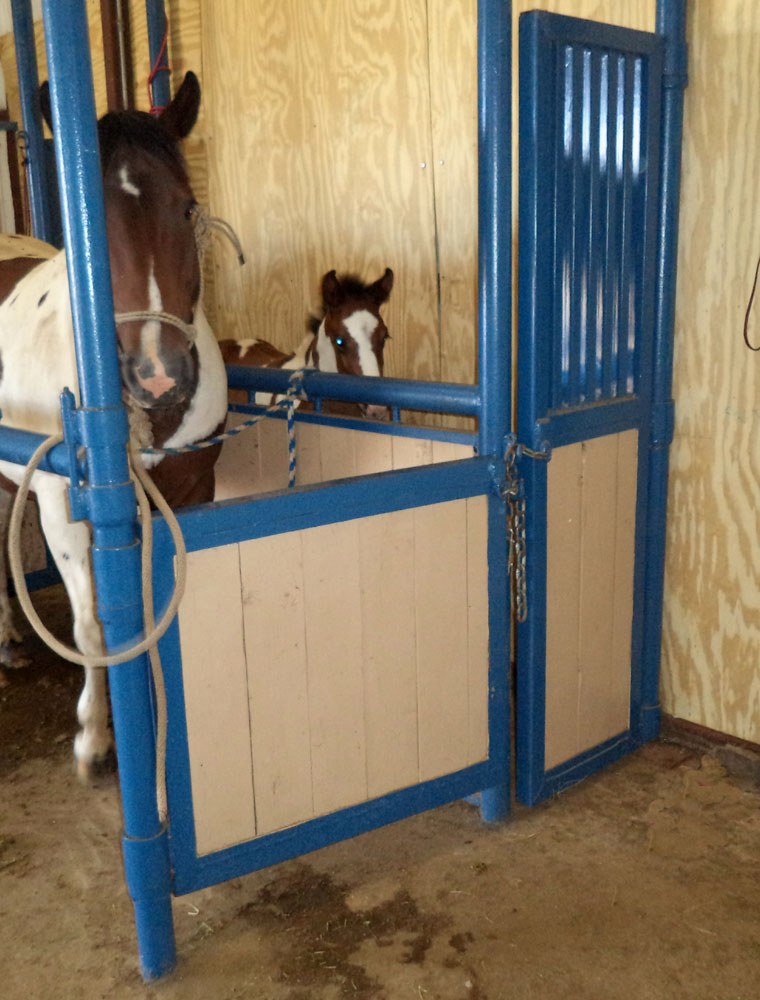
Mares are in "Stocks" while being examined, bred A.I.,
etc. and the foal is in a "Foal-Trap" along side
the mare.
The foals are safe there, and this is also a great place
to safely de-worm the foals with little stress.
This is also a great
opportunity for Learning.
They learn to walk through Barn
Doorways, experience Concrete Floors, and Lights.
They also have to learn to enter the Narrow Doorway into
the 'Foal-trap'. This is very similar to a narrow
Horse Trailer entrance Gate, and the narrow
Slant-Load Stall Compartment in a Trailer and is another
perfect first step
toward safe loading and hauling.
They also learn to wait patiently while being in a
restricted area which is another great step toward being
well behaved in a trailer.
They will be asked to stand in the 'Foal-Trap' many
times while at the Breeding Facility, and become so
comfortable with the process,
that they often walk right in before the mare is even in
the stocks.
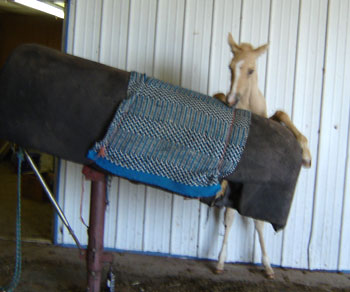
While in the breeding area... there are other things to
investigate!
Like the "Phantom". This colt thought it was a
great Toy.
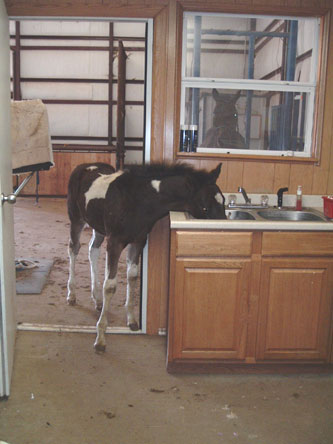
The foals become so comfortable with all the new
surroundings... they may try to check out the Lab!
I usually wean foals when they are around 4 to 5 months
old, but can may wean earlier in the case of a severe
Drought or
if there was an unusual issue that warranted weaning
sooner.
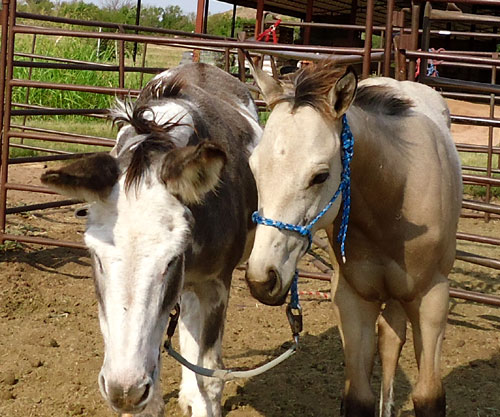
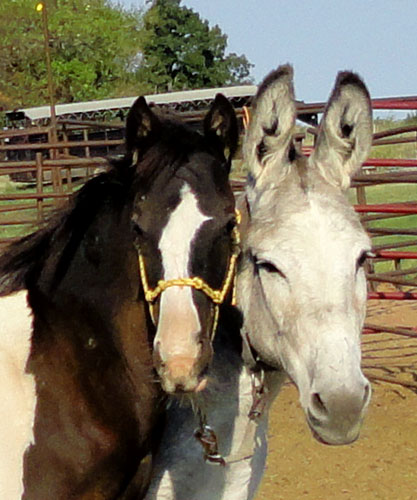
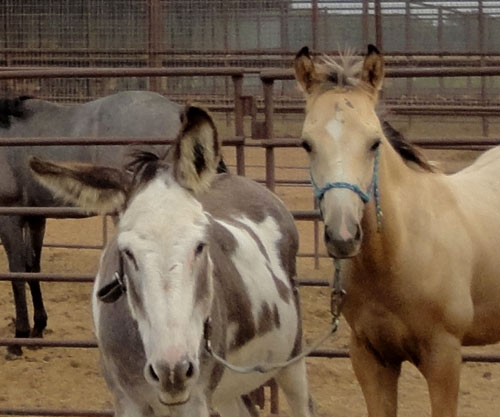
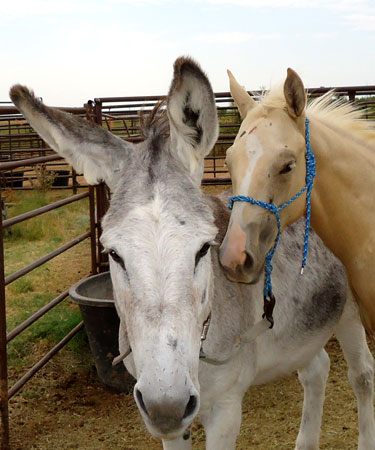
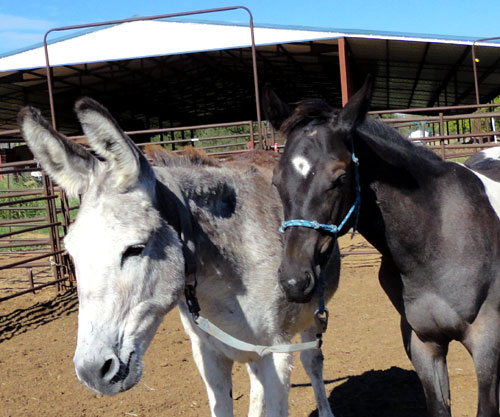
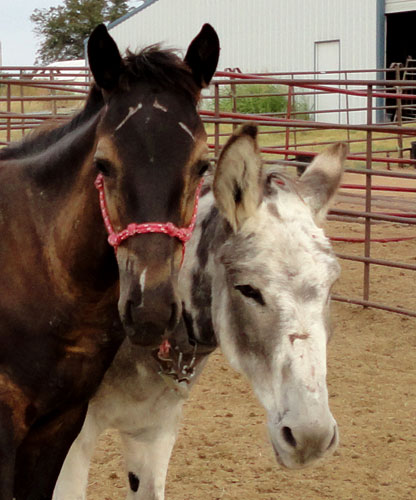
Once, weaned... they get some "Donkey-Time".
I end up explaining this over and over again...
so I'm including this information for everyone to read.
I feel the Donkeys can do a much better job of
establishing a Great Foundation for Halter Breaking than
People can.
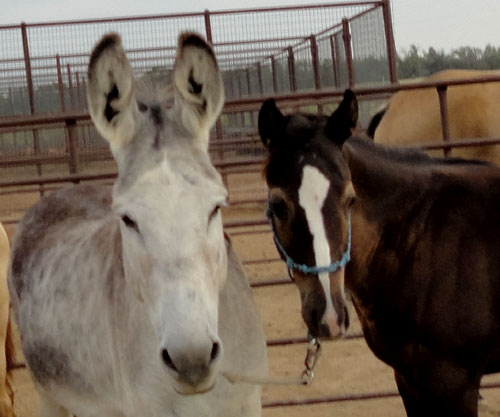
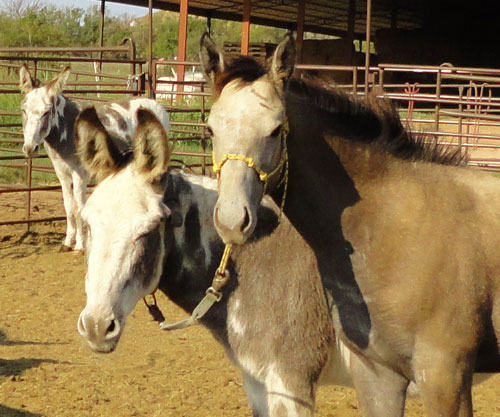
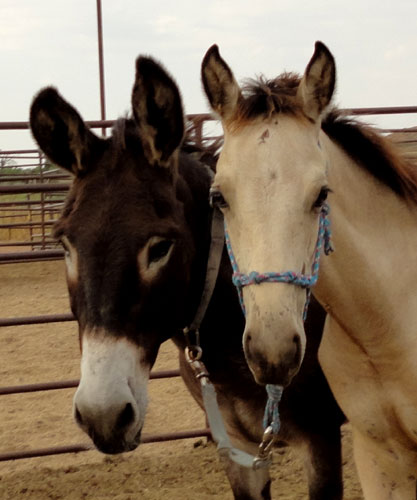
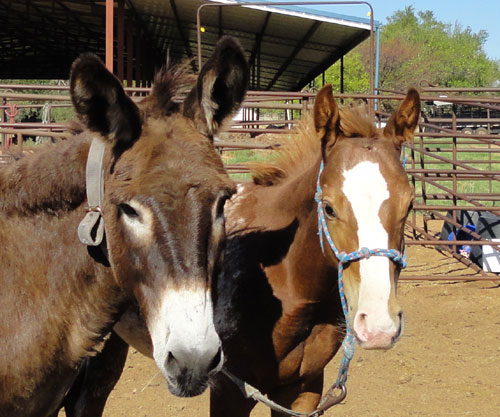
So, I let my Donkey Trainers teach them the basics.
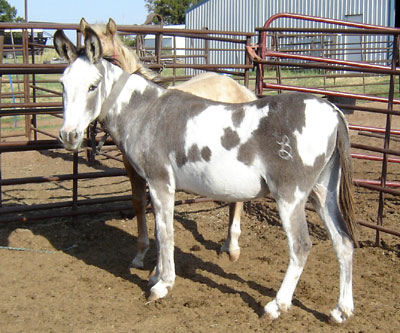
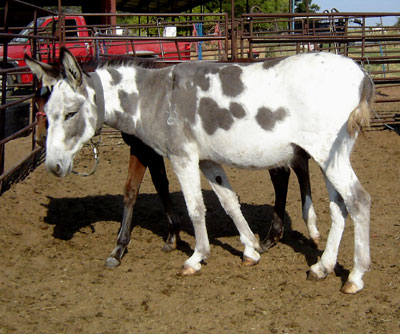
Here are my 'Trainers'.
'Pete'
|
'Repeat'
 |
'Brownie'
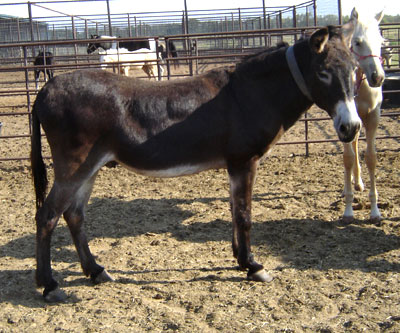
|
'Pedro'
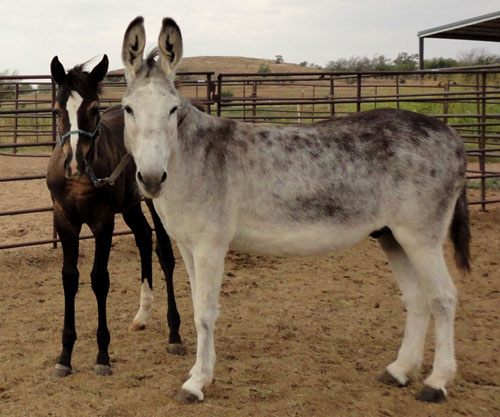 |
|
'Miss Jenny'
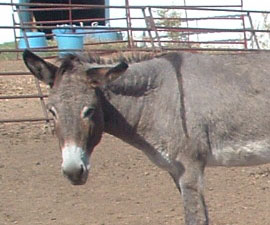
|
My Donkeys have quite
a personality! Here they are playing Tug-Of-War
with a garden hose!
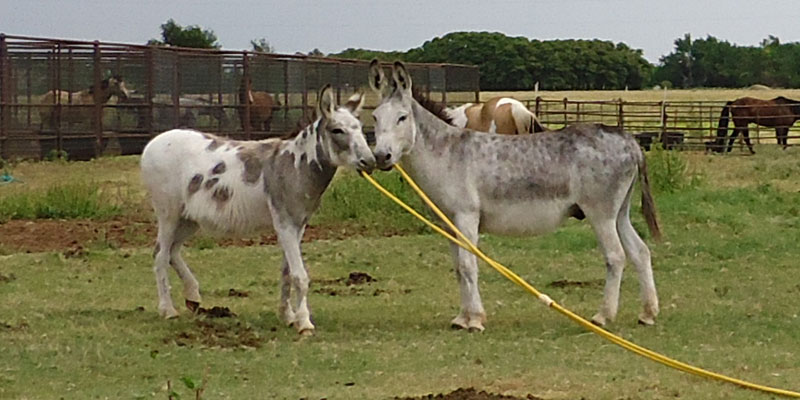
In the Fall of each
year, my Donkeys help train foals, but most of the rest
of the year... they are on vacation.
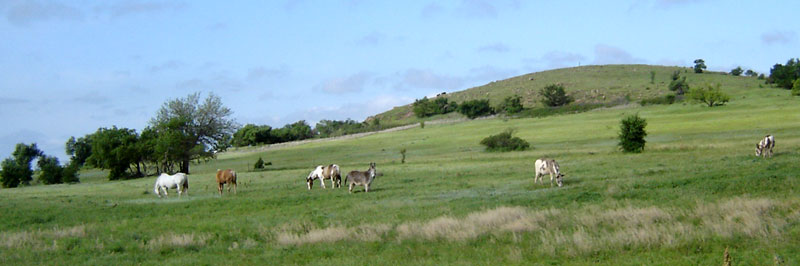
I am willing to adopt
gentle donkeys.
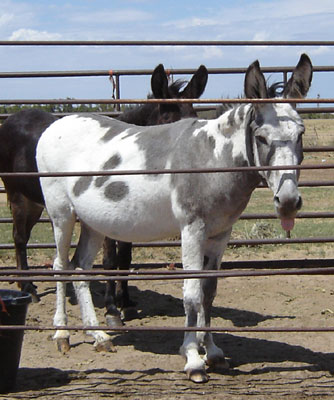
Here is one of my donkeys expressing his opinion of
untrained foals! Just kidding.
He has a habit of sticking his tongue out, and sucking
on it like a pacifier!
I think it is a cute photo, and decided to share.
OK... back to explaining the Training...
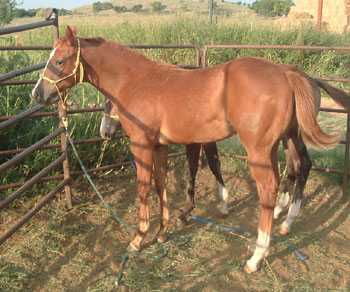
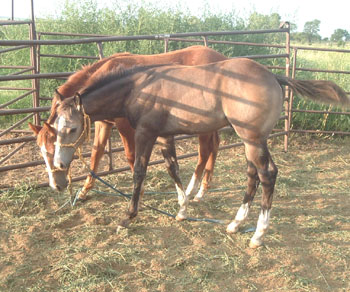
I start off by doing "Drag Rope Time" for 2 days.
I make rope halters for the foals, and attach long drag
ropes.
I usually put 2 to 4 foals together in a small pen. 4 is
best. The pen I use is around 15' by 20' and very
safe with no sharp edges or places to get tangled.
They all step on each others ropes, and the ropes touch
them all over their legs, backs, etc.
This really
teaches them to give to the halter pressure, lower their
heads and not fight the rope, and get used to ropes
touching them everywhere.
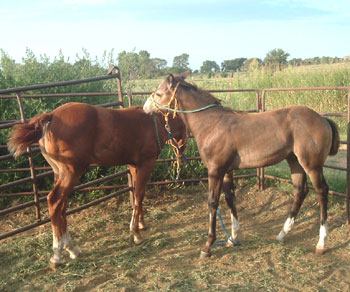
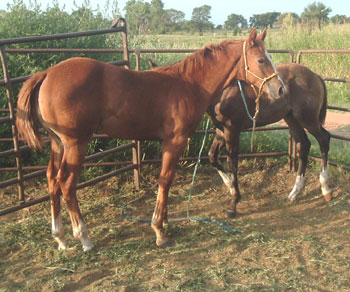
Sometimes... I'll put halters and drag ropes on them,
and keep them with their dams for a couple more days.
Again, keeping them in a small, safe area during this
time is very important.
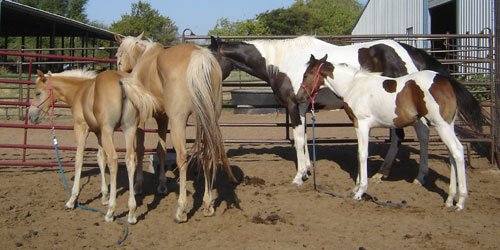
After 2 days of "Drag-Rope Time", I connect the
foal to a Donkey.
A Gentle, halter broke, quiet, non-aggressive
Donkey is a must. The Donkey wears a wide Collar
with a heavy duty ring sewn in it. I use a short
Trailer Tie with a Bull-Snap on one end and a Panic Snap
on the other end to connect the two. I may even
tie a knot or two into the trailer tie to make sure it's
not too long. If it's too long, it results in an
increased risk of getting tangled, and getting injured,
so a short connection is critical. Once in a
while, a leg will get over the trailer tie, and they
will need to be untangled.
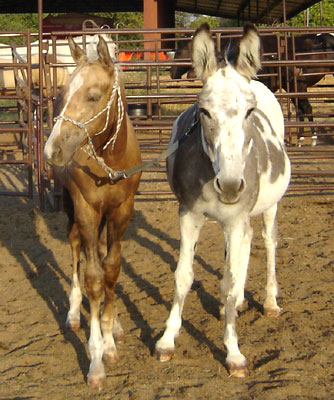
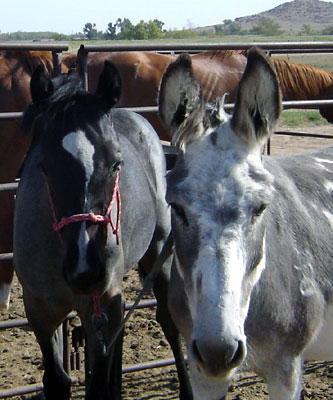
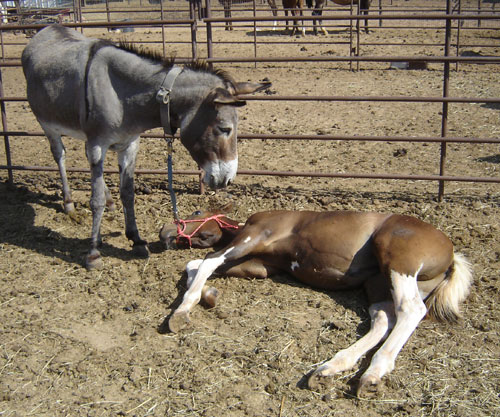
Here is a picture of a filly a few
seconds after being hooked to a Donkey.
They tend to pull back and panic a few seconds.
They may even rear up, and flip over. But, they
learn quickly that 'acting up' or being afraid will not do any good.
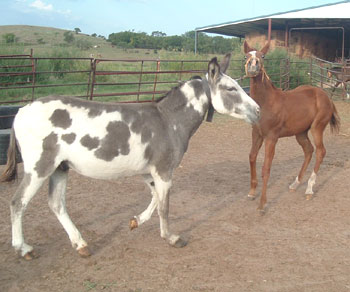
Here is the same filly about 1 minute after hook up.
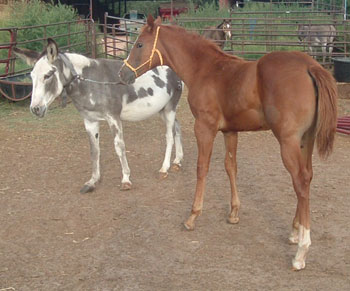
Within a short amount of time, she was starting to lead.
Here is another Foal that decided to Rear immediately
after being hooked to the donkey.
The Donkey remains Calm, and the foal quickly learns to
calm down and that rearing will not take the pressure
away.
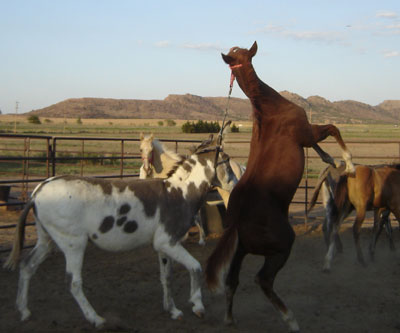
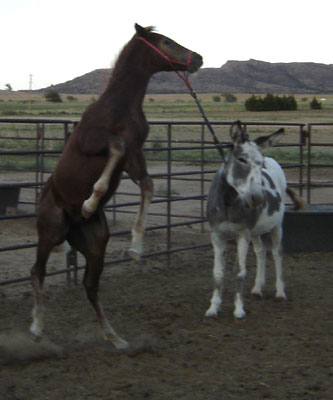
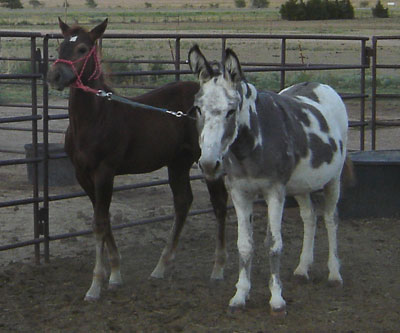
After about One Minute, the colt decided to quit
resisting, and keep his feet on the ground.
The calming effect of the donkeys is one of the keys to
success.
The colt was beginning to lead within a couple more minutes.
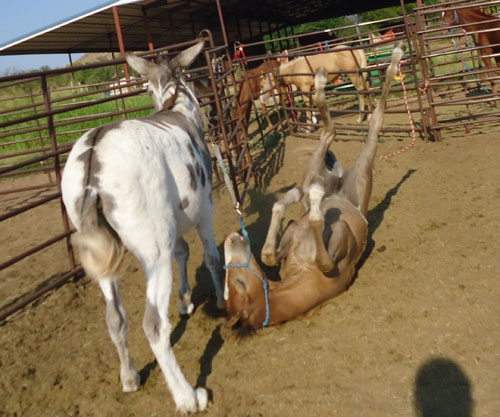
Immediately after this colt was hooked to a Donkey, he
reared up, lost his footing, and fell over.
I actually Hope this happens to every foal. It
sure reinforces the lesson of keeping their feet on the
Ground!
After landing on their Butt.... that is usually the Last
Time they rear!
(Meanwhile, the donkey remains calm and quiet.)
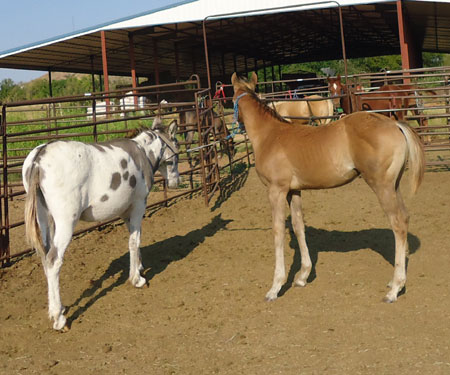
a few seconds later... back on his feet... Lesson
learned... and never reared again!
I leave the foal hooked to the Donkey for 2 to 3
days.
I always do "Donkey Time" in a big, safe corral
with good safe fencing to avoid injury.
This should never be done in mud or slippery footing, or
unsafe surroundings.
This method teaches the foals to stand tied quietly.
There may be several foals all doing 'Donkey-Time'
together... so they also have to learn they can't always
be right next to their friends.
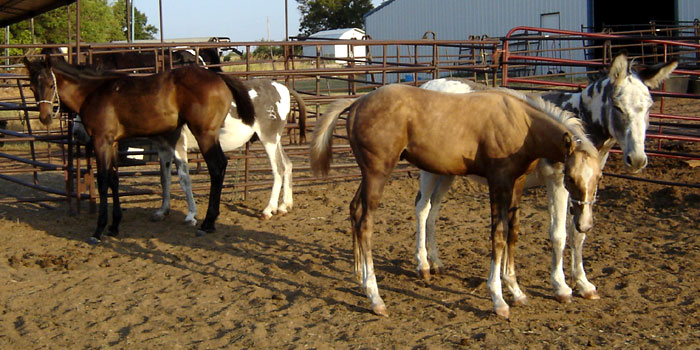
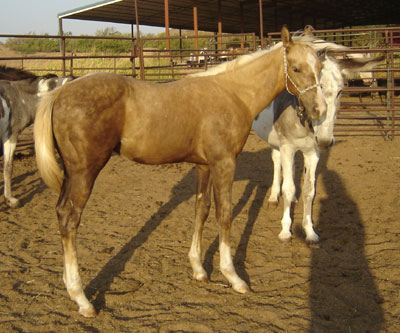
At first, they resist being led, and keep a
tight rope... but the donkeys are great trainers.
They often circle the foals at the beginning to get them
leading.
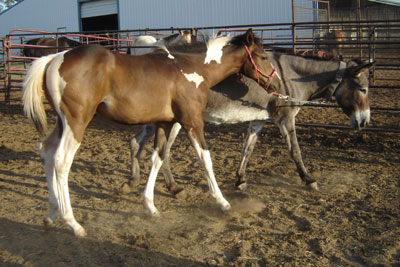 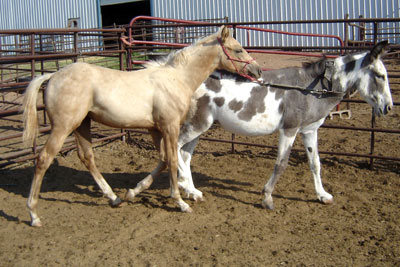
and they quickly learn to lead on a loose rope without
pulling.
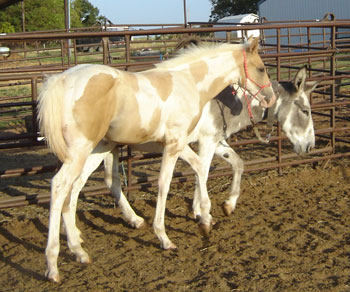
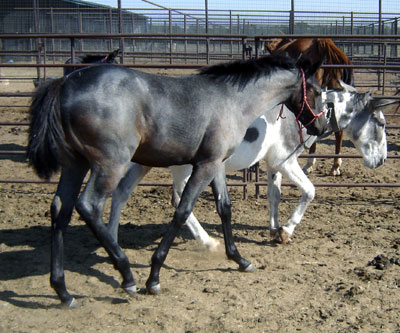
They learn to stay calm and walk with their heads down.
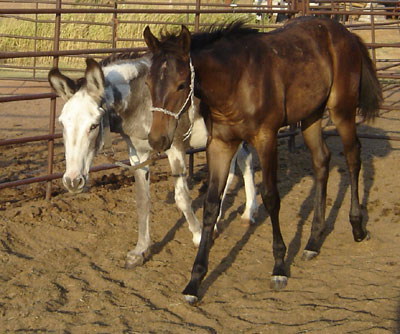
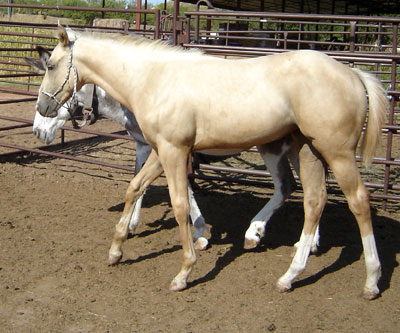
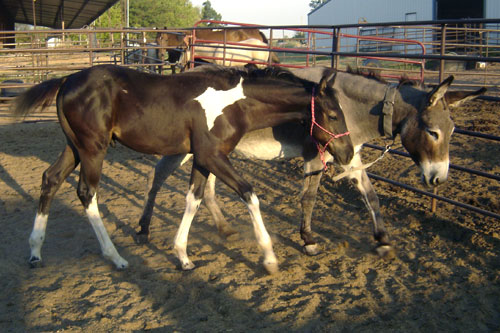
Not only do the donkeys teach the foals to lead, and
stand tied, they usually teach them to back up too!
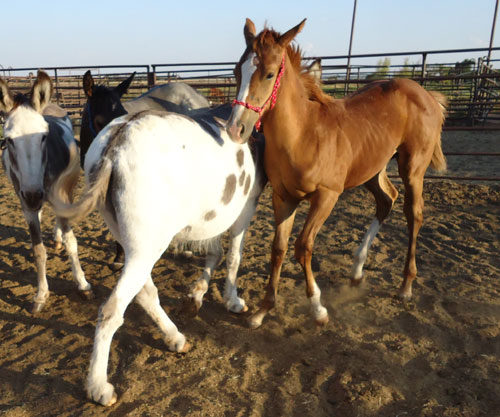
Occasionally, a foal or donkey will step across the
connecting tie. I Love it when they do this!
They really learn to think their way through the
situation, and not panic.
After struggling for a moment, they usually stand on 3
legs, or lower their head.
I won't untangle them until the foal learns to give, and
not panic. It usually doesn't take very long to
understand to "Give to the pressure".
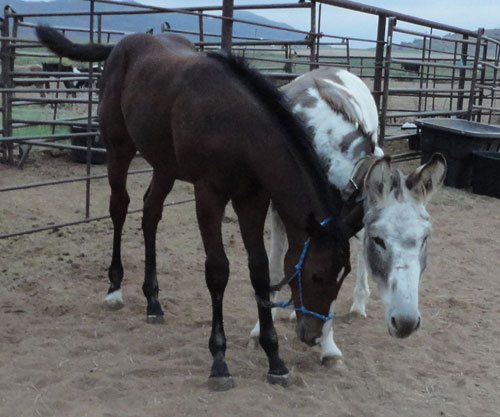
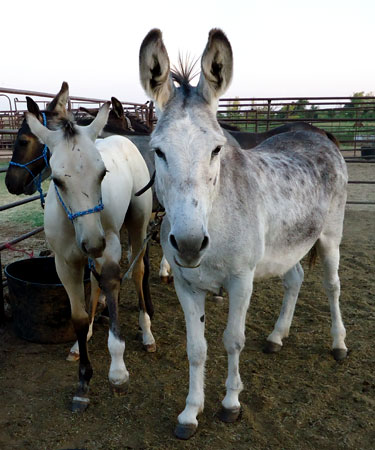
The Donkeys also help teach the foals manners and
patience.
They learn to eat and drink when the Donkey takes them
to water or feed, because otherwise...
the Donkey may
not be hungry or thirsty... and may stand off in the
corner of the corral for hours...
Below is a great lesson in Patience!
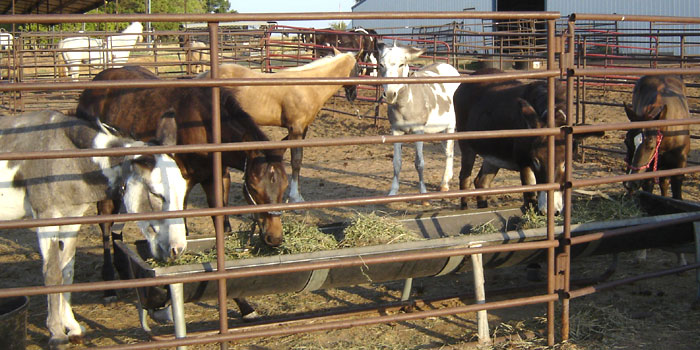
Two of the donkeys are wanting to eat at the
feeder, but one of the donkeys isn't hungry.
So, he is holding his 'Student' away from the feeder.
The colt is forced to stay with the donkey even though
he wants to go to the Alfalfa.
A perfect lesson for him to learn he has to be patient,
and wait until he is allowed to go to the feed trough.
Several minutes after this photo was taken... the Donkey
decided to go ahead and eat, so the colt didn't go
hungry...
but he did learn a great lesson in patience.
These Donkeys can give my foals more education in 2 days
than I could do in 2 months.
Plus, the donkeys are so stubborn and so strong, that
they can teach them more consistently than I can.
The Donkeys also have a "Calming" effect on the foals,
because the Donkeys do not get upset during this
learning time.
Occasionally... the foals will do something
unexpected...
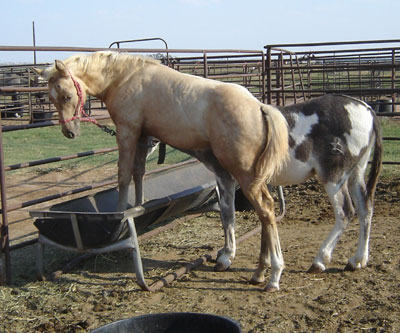
The donkey decided to stand by the feeder a while... and
the filly got creative!
 I
also see the foals learning to adapt to unexpected
things....
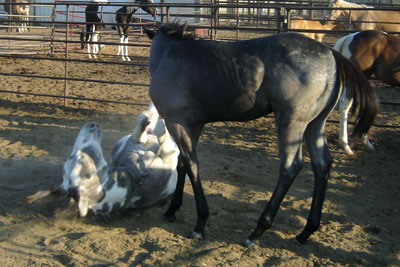
like a donkey who decides to lay down and roll.... while
still connected to the foal!
I see this happen occasionally... and I finally caught
the moment in a series of pictures very early one
morning.
Here is a foal who had something unexpected thrown at
him one morning... Donkey Hooves!
I don't think the colt noticed at first...
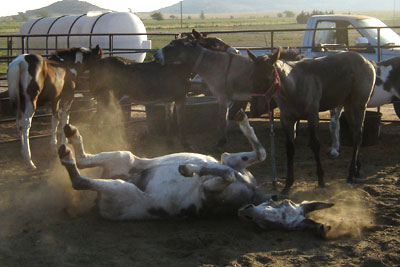
then, the flying donkey hooves frightened him...
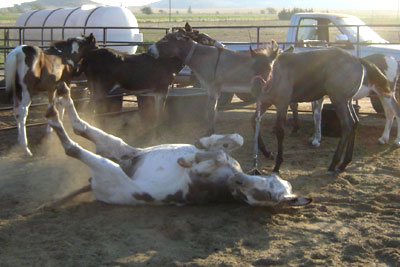
but, he instantly relaxed...
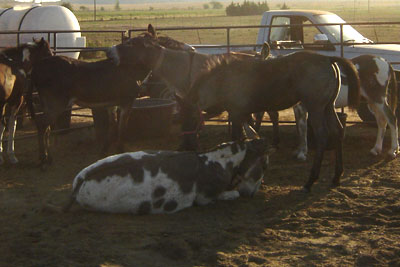
(I moved to the other side of the pen to get better
pictures)
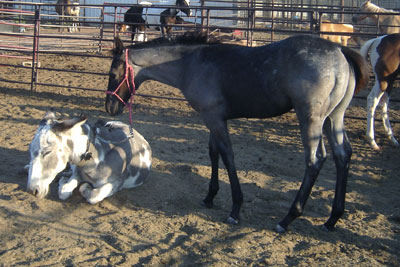
as the donkey rolled back and forth...
and then the donkey took a short nap while the colt
waited patiently.
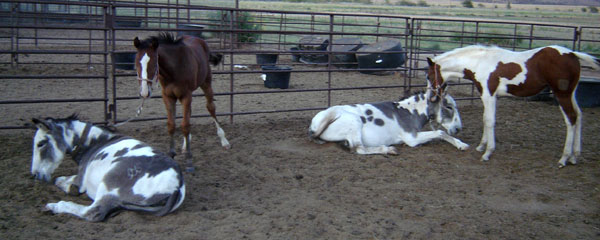
Here is another picture with my Donkeys taking a rest as
the last of the 2011 foals were completing training.
 It's also common for the foals to become so
relaxed...
that they will take a nap too while attached to the
donkey.
The donkeys don't mind.
All Foals and Horses are
freeze branded for several reasons.
(Click here for info on Freeze Branding Services)
One, is that I am very proud of the horses I
raise, and I want them to forever carry my ranch brand, and be
a representative of my work. They also become a
living advertisement for my ranch. I have had lots
of contacts from people who saw one of my 'graduates' at
a Barrel Race or Performance Competition, and then
contacted me seeking to buy a horse.
Two, is Identification. Often, I have many foals, especially from
one stallion, that look almost identical. I can't
hardly tell them apart. So, I brand them before
they are weaned. I don't want to take a risk of
mixing up foals, and putting the wrong papers with the
wrong foal.
Three, is related to Identification. It's
Anti-Theft. I hear way too often of a horse at a
Roping competition, a Barrel race, or even a Trail
ride... that has been stolen right out of the trailer,
or stolen while tied to a trailer. If these horses
were branded, they may have not been stolen.
Branded horses are seldom ever stolen, because they can
be identified way too easy. Also, if horses get
loose or are lost in a crisis like a flood, tornado,
hurricane, or fire.... if the horse is branded... it may
make all the difference in finding and recovering the
horse and not loosing it forever.
Here are a few foals that were about to be branded...
and they were quite curious about the equipment
and vapor coming from the Liquid Nitrogen and brands.
Even though these horses are 'Ranch Horses', they are
exposed to so many things that most are seldom spooky.
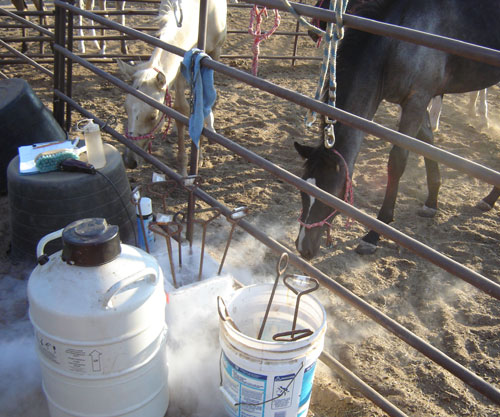
I Freeze Brand all my horses, instead of
'fire-branding'.
Freeze branding takes a lot more time and
money than 'fire-brands', but it is worth it. It causes very little
pain to the horse. It stings for just a second
when the brand touches the skin, then the skin instantly goes numb
from the cold. The skin receives a mild 'frost-burn'
which effects the hair follicles. Thus, resulting
in white hair coming back instead of colored hair, or no
hair coming back if branded for a longer time.
I will Not Fire-brand a horse. Fire-brands use
heated metal that actually burns the flesh causing
bleeding, a wound, and eventually a
scar.
Fire-brands are cruel and cause significant pain, during
and after branding, and leave a horrible wound and scar.
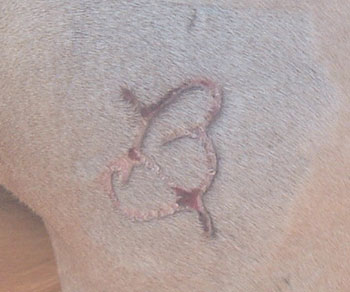
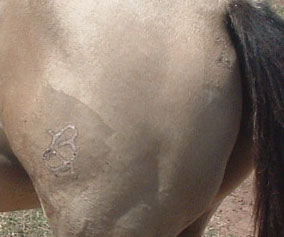
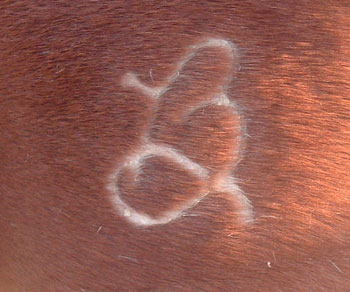
Here are several pictures of actual freeze brands.
Before branding, the hair is clipped short, and the skin
cleaned.
The brand is applied for an exact amount of time.
(9 to 12 seconds)
Immediately after the brand comes off, the skin is
indented.
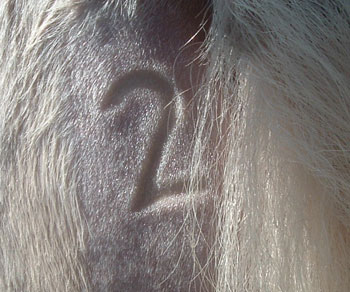
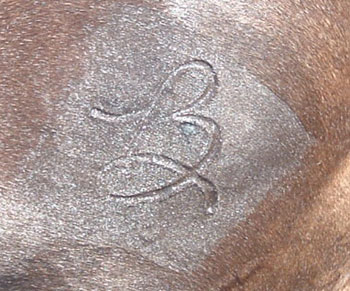
After a few minutes, the skin is puffy where it was
branded. That's it. Nothing tragic.
There are no open wounds like Fire Branding. No
bloody, painful wounds to get infected.
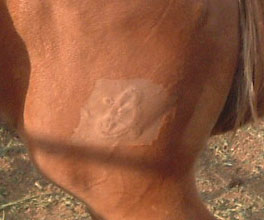
After several days, the skin gets dry, and looks like a
'Sun Burn'.
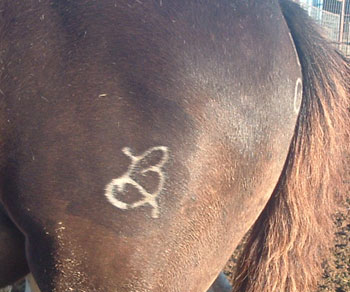
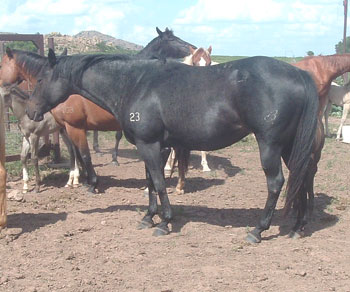
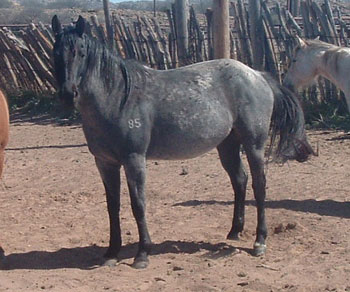
Broodmares are sometimes freeze-branded with an individual number.
This can be essential for identification in a large
breeding program if horses look alike.
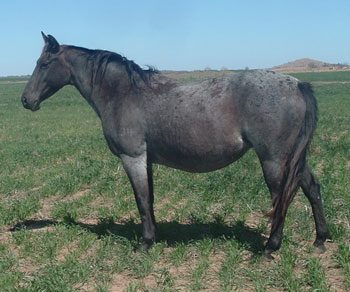
As you can see... three Blue Roan mares... all look very
much alike... and if it were not for the brands... they
could easily get mixed up.
Cremellos and Perlinos also look very much alike.
The mare's I.D. number is branded onto the right butt of her
foal for identification.
The sires are also assigned an I.D. number and that number is
put on the left butt of each foal.
Therefore, giving each foal, each year, a unique I.D.
Over the years... I've adapted the branding and branding
placement in a way to make the Ranch Brand (B) very
visible, and
to try to make the I.D. numbers less visible. I
now place the numbers in a position on the Butt,
slightly under the tail,
so that the numbers are usually Not Visible when the
tail is down in a natural position. The hair from
the tail hides the numbers well.
Here is a picture of a colt that was recently branded...
but his tail is down, and his numbers are Not visible.
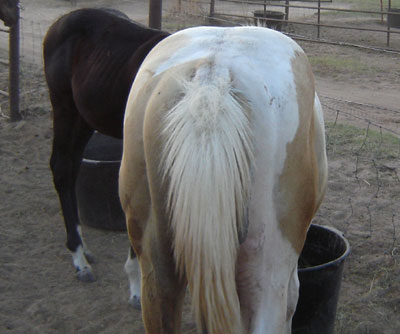
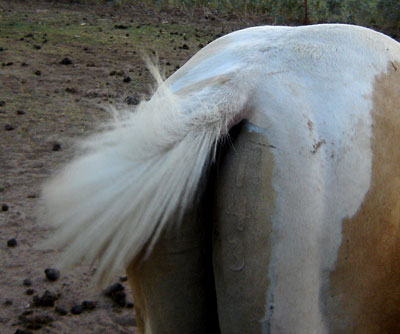
Only when his tail is moved to the side can his numbers
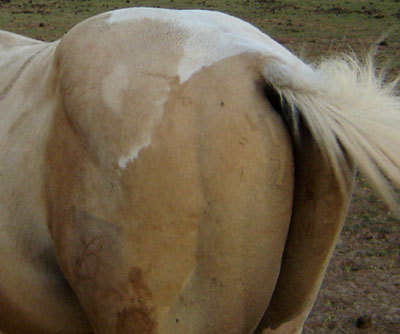
be seen. He has a 143 on his right butt, and a 17
on his left butt.
These brands were done several days prior to the photos.
Here, the skin is in the 'dry stage' and will eventually
get flakey, and then eventually be more visible.
I hope this information was informative and helped
answer any questions you had about 'Ranch Raised Foals'
at Bedonna's Stallion Station. Feel free to call
580-471-4040 for additional questions about foals.
Wishing you a wonderful and Blessed day,
From Bedonna, Amanda, Pete, Repeat, Brownie,
Pedro, and some of the 2012 Foals.
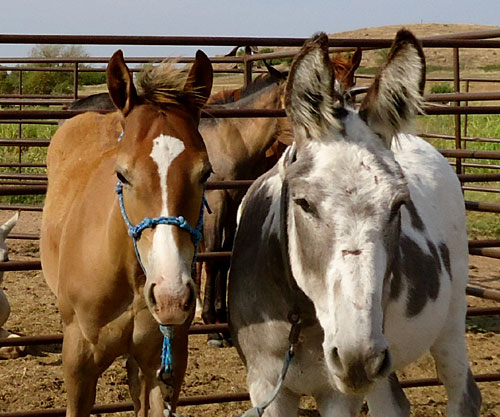
(Custom Made Hand-Tied Rope Halters for Foals available
for sale)
To see all available
Foals... Click links below...
Custom Made Foals Program
2017 Foals
2018 Foals 2019 Foals
2020 Foals
a few comments from customers...
in case you didn't see it at the top of the page...
I try very hard to let
my foals experience as much as possible while being
raised here at the ranch.
I don't want to 'Pamper' them, but 'Prepare them' for
life.
I hear most of my buyer
report back with comments like...
"This
is the smartest horse I've ever owned."
"You just have to show him something once... and he
picks it right up"
"He seems to adapt to whatever comes his way".
These are the kinds of
comments that make me believe that raising the foals
the "Ranch Way" sure has its benefits.

Debit and Credit Cards accepted for your convenience.
Small Convenience Fee applies to all
sales with cards.
5% Fee applies to US Sales. 7% Fee applies to
European or other non-USA sales.
� 2011-2019 Bedonna's Performance Horses
Hosted by iPowerweb //
Originally
Designed by Rony Pony Web Design
Maintained, Edited & Updated Daily by Bedonna
NO Pictures, Text, Graphics, or Information from this site
may be used, borrowed, or taken,
without written permission from Bedonna Dismore.
|